


 |
 |
 |
Oregon Music News: Oregon’s all-genre music magazine since 2009
Home > Jazz / Blues
12/11/2025
Legendary PSU Music professor Charley Gray has passed away: A remembrance / Plus interview from 2015
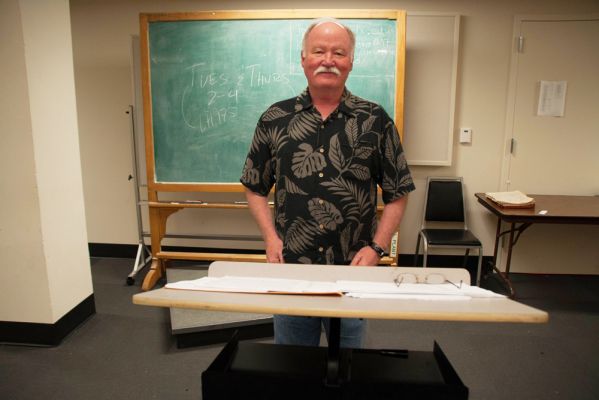
By Lars Campbell // Charley Gray died of cancer on Friday, November 7th. He spent 27 years educating generations of Jazz musicians at Portland State University. He was named a Jazz Master in 2015. Also listen below to the OMN podcast from that year.Here's a remembrance from from trombonist Lars Campbell.
Over the past thirty years, the number of jazz ensemble charts that don’t have a composer or arranger credited at the top right of that music has grown exponentially. The arrangements are very sophisticated, wonderfully scored, yet no one has laid claim to them. If you started to dig through the Jazz Ensemble library at Portland State University, you’d be astounded by the number that fit this category, outsized because of its faculty member. That was one quirk of Portland State University professor emeritus of Jazz Studies Charley Gray — his resistance to attributing his name to all the beautiful creations that he worked on throughout his time at PSU.
Charley came to Portland after an already full life of varying work in the commercial and jazz worlds, most closely following his time at North Texas State University, where he played electric bass in the 2 O’Clock Lab Band and earned a master’s degree in jazz composition, studying with Paris Rutherford. He also had a touring career, conducting the Ice Capades for many years, making connections in cities across the country (including many future colleagues in Portland!). He had previously worked as a high school band director in Marin County, where he taught both Joe and Ralph Alessi (both would later go on to have internationally successful careers, one in the New York Philharmonic, and one as a jazz superstar).
At PSU, Charley got a job with a misfit band; never a full group, always a hodgepodge of varying orchestrations, and that’s where the aforementioned charts come in. Charley never worried about who was in front of him in his class; he knew he could write his way to a successful group every year. So Charley did what so many would not do: he spent countless hours writing custom arrangements for every group he had through his 27-year career at PSU, crafting arrangements that suited his specific players each time. He often said that it didn't matter if a trumpet player could only play a G on top of the staff; if that was the top of their range, it would sound exciting in a shout chorus for that player. And he did that, year in and year out, through eras of so many Portland musicians.
As a friend, Charley outshines so many. The countless times he answered the phone for a Finale question, a scoring question, or invited his former students to his house for holidays and celebrations were enviable. He created community. He made a place where people fit. On more than one occasion, he headed off trouble from the PSU administration for jazz students (and occasionally caused his own trouble with his incredible sense of humor), protected his people, and made a family vibe each year in his classes. His history classes might have questions for non-musicians like “What is a gig?”, but his inside knowledge of the music was never-ending and constantly evolving.
As a colleague, Charley brought good humor to a rehearsal, and a low-key, unassuming vibe to the room. But when he wanted the band to be swinging, when he wanted raw power, when the groove wasn’t happening, in each situation, Charley would come up with just the right three-word phrase to get the most out of the musicians in front of him, be it the PSU jazz ensemble or the Portland Jazz Orchestra full of the city’s best professional players.
But the thing that made Charley different in my eyes was the way that he cared for everyone, the humanity that he spread into every room he entered at PSU. It’s easy for a teacher of any level to gravitate towards the superstars, to nurture and encourage them, to try to create the legacy that says “I taught THESE folks”. And while Charley did teach those musicians and write arrangements that fit their styles impeccably (Lars Attacks was mine), he really cared for every single player in the group. Those arrangements also fit the third trombonist who might have a struggling embouchure, the second tenor who played flute until last week, or the adult who had returned to playing after 40 years off.
And it wasn’t just the writing. He cared about the people. In music school, unfortunately, it’s all too common to see terraces of players. People find others who play at a similar level, who have the same access, play in the same ensembles, or have similar egos; they gravitate to each other and don’t mix. And this was no exception at PSU. But Charley, he never bought into any of that. I remember vividly a story Charley relayed to me about a saxophonist who was mostly a classical player on a different instrument, who Charley welcomed into the band with open arms. And at the end of that student’s time at PSU, that classical player made a special thank you to Charley.
They said they knew they weren’t a great player, that they struggled to keep up, but that Charley had made them feel so welcome, such a part of the group, that they got an enormously rewarding experience out of being in Charley’s ensemble. That is the person that Charley was. He would fire the best player if they were a jerk and brought a bad vibe to the group (we all saw this happen) and welcome the player with the great community vibe. Charley was the community vibe. He took care of people. He sent people home with leftovers (both food and knowledge), always wanting to fill people’s plates.
I can’t find the world without Charley yet, but I know his ethos is living in so many musicians in Portland. When I think about the freelance jazz world in our city, so many folks either played in his groups or called him a colleague - and all called him a friend. Given that legacy of humanity that he shared with us all, I hope his ability to find humor, to synthesize into few words a true depth in the music, to create a world that inspired every musician to play at the top of their level, and accept everyone for the musician that they are will live on in us all as a whole.
Comments


Podcasts

Rebecca Sanborn A spectacularly thoughtful new album / Coffeeshop Conversations #458
Sep 17, 2026
By TOM D'ANTONI // She's a keyboardist, composer, singer, arranger with aa new album of songs that will make you think and feel. Shadow Work features a huge cast of Oregon's most talented musicians. Is it Jazz? Are they art songs? Listen to one which features her daughter singing harmony. The last time she was on the Pod, Nadia was in urtero.
Also, find answer to the question: wither The Blue Cranes?
Now Trending

Oregon Music News - Oregon's all-genre, music magazine covers music news and events in Portland and throughout the state.
Contact Us | About Oregon Music News | Advertise With Us
OMN Contributors | Web Help