


 |
 |
 |
Oregon Music News: Oregon’s all-genre music magazine since 2009
Home > News
05/27/2026
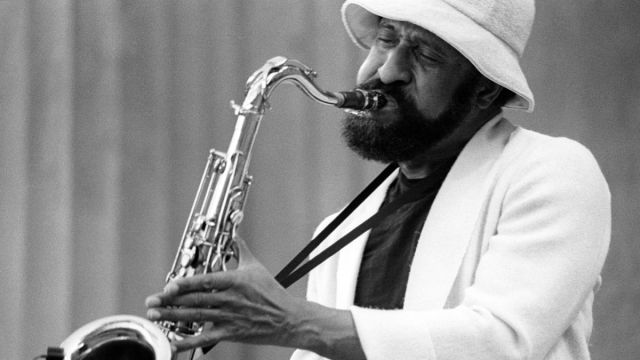
Saxophone Colossus Sony Rollins: An appreciation
By MICHAEL SHOEHORN CONLEY // Sonny Rollins passed this week. It seems like Sonny could do anything he could think of on the horn, If Sonny did it, it was legit.
Saxophone Colossus Sonny Rollins died yesterday. I'm a guy who's kind of skeptical of celebrity eulogies, but in my orbit, Sonny Rollins was more than a celebrity; he was an ascended master, perhaps a saint. I know I'm not alone in regarding him in this exalted category. If you follow the trajectory of his music you will understand what I'm talking about, especially if you fill in some of the biographical details, stuff from the liner notes to his records, like his incorporation of Eastern spiritual practices, his sabbaticals from the gigging life, his pursuit of a higher calling and connection through his horn. He was that guy rocking a mohawk, playing hard bop in 1960. The iconic man with a saxophone on that bridge in New York.
The flip side of that was Sonny Rollins the entertainer, transforming old showbiz themes into advanced treatises on the concepts of theme and variation, rhythmic displacement, and harmonic substitution, and extrapolating lyrical content into abstract commentary on love, romance, and the expansionist adventure of American ideals. Some of his daring innovations became their own subgenres, such as the pianoless trio format for horn players. If Sonny did it, it was legit.
In addition to his stunning improvisational flights on songbook standards, show tunes, and folk material, he gave the world a nice set of vehicles for us to use in our own explorations in the jazz idiom. Tunes like Pent-Up House, which seems like it was made for tap dancing; Oleo, a slick “rhythm changes” number; St Thomas, the rollicking party tune with its accessible melody and structure; and fantastic and durable blues numbers like Doxy, Tenor Madness, and the incredibly simple Sonnymoon for Two.
It seems like Sonny could do anything he could think of on the horn, and he was known for taking chorus after chorus on songs like Mack the Knife (Moritat) investing the legacy of Kurt Weill and Bertolt Brecht with meaning beyond their original statement and purpose.
Aside from his contributions as a composer and theoretical mind, his spiritual power is something that I don't want to overlook, because when I heard him play live it made a deep impact. One story I’m fond of telling is from a time when I was going through a difficult spot in my personal life. I went to Sonny's concert at the Festival de Jazz de Montreal and walked out of there having been uplifted and unburdened, and I can honestly say I didn't have an impure thought for 10 days! Sonny simply inspired me to live better, eat better, and approach the work of a musician with reverence for humanity, the environment, and life itself.
He modeled healthy, productive behaviors, and was kind to people.
I met him only once, at the stage door of a concert hall in Yokohama. I must have been speechless, so my companion told him “You’re his idol”. I quickly confirmed the statement and shook his hand with gratitude. I remember him saying something humble and smiling.
The last time I saw Sonny Rollins perform was at the Arlene Schnitzer Hall in Portland. I took my eldest daughter, who was at that time a middle school drummer/percussionist, and we had pretty good seats. I wanted her to experience his greatness, and maybe understand what drives my inspiration.
When musicians talk of Sonny, without mentioning a last name, we all know they mean Rollins, not the other sax playing Sonnys, great as they may be. I have Sonny's biography, a rather thick tome, sitting on the to read pile in my office. I haven't cracked that book yet but I know that in reading it, and listening to his music, I will feel his influence on my life until it's finished. Thank you Sonny, for everything.
Comments

Podcasts

OMN Preview of Jeremy Wilson Foundation New OHP Info Session 10/22/2026
Oct 18, 2026
By TOM D'ANTONI and PAUL K WARD //
f you are a musician or music industry worker with the Oregon Health Plan (OHP), JWF and the Oregon Health Authority have important information for you about eligibility changes coming in 2027.
Please join JWF and Oregon Health Authority staff for a presentation about these changes. Among other topics, we will discuss how to navigate new work requirements when self-employed with fluctuating hours and income, as is often the case for musicians and other music industry workers.
Thursday, October 22nd
Doors 10:30 AM, event: 11 AM -1 PM
Musicians Union Local 99
325 NE 20th Ave
Portland, OR 97232
Now Trending

Oregon Music News - Oregon's all-genre, music magazine covers music news and events in Portland and throughout the state.
Contact Us | About Oregon Music News | Advertise With Us
OMN Contributors | Web Help